

Techno Topographies #1 - Detroit
Searching for answers and understanding in the birthplace of techno.

*** All impressions are collected over Movement Weekend 2019 ***
Arriving in New York during the summer of 2018 would prove to be a taxing but worthwhile experiment in self-discovery. People place this city in high regard, and for good reason. Despite the gravitational pull, my integration into its crowd of admirers felt like a complex netherworld of wrong turns, missed subways, and loneliness. The overwhelming essence of an idea much larger than myself rendered my ability to be me useless.
The energy needed to operate functionally, adapt, and attempt to thrive in a city that leered over my existence is one I’m still paying debts on. It’s funny how we do this. Fight to be part of something that doesn’t initially want us. See me, notice me, accept me. The experience acted in defiance of previous lessons in growth or adaptation. The constant assumption that I was shrinking and reverting past the point of no return, to slowly and painfully come out the other side with the ability to self-preserve. Ventures through techno lay by the wayside as I attempted to navigate a culture and lifestyle that existed in an uncanny valley from the world I was familiar with.
Familiarisation, routine and escapism emerged from the concrete grid. Initially, taking up residence in the likes of Birdy’s, Carmelo’s and Happy Fun Hideaway that populate the infamous intersection between Bed Stuy and Bushwick. These nights travelled onwards into the likes of Bossa, Nowadays, Good Room and Elsewhere. Hints of familiarity and small revelations of the comfortable variety began to return to my existence. Mutual understanding can be found on dancefloors the world over. Coming face-to-face with it provides reassurance for your decisions. Of immigration, of going out, of being in that space at that time. In big cities, social contracts are of endless quantity and little value. Despite their reputation, it was through them that the idea of visiting Detroit for Memorial weekend was encountered. Why would I refuse?
We hit the tarmac on an overcast but humid afternoon. Detroit Metro Airport exists in its own world outside the atmosphere of the city. The vacuum of the terminal sits in the quintessential hospital lighting and off-white flooring familiar to all major terminals, featuring a red monorail that oscillates from top to bottom. Order and formality within the placelessness felt disruptive to the mindset of this retreat.
Departing this liminal space via taxi, the landscape of Wayne County invites the viewer to stare into an expanse of past, present and future. As a European, the ability to acclimate to the sheer size of the Midwest landscape could never be achieved. I sat small in the back seat, trying to break down the highway, imprinted with direct intention, suburban property holding hands with nature as it succumbed to blight, and the unending openness.
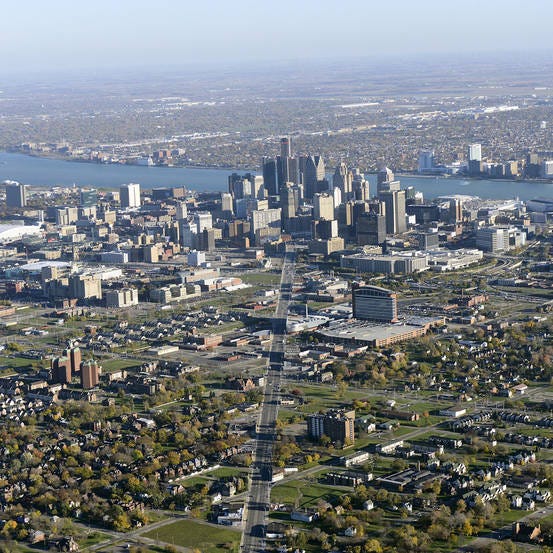
Approaching the city limits, clusters of towers downtown broke the skyline. Beige and grey office blocks perch along roads as wide as the highway that run through downtown. At sudden points, the height of buildings drops, giving way to redbrick dive bars, pillared banks, and European-esque churches. Craning my neck reveals the two-car monorail known as the People Mover. A relic of the ideal public transport system envisioned for the American public from yesterday’s tomorrow.
You can spend a large portion of your life curious about a certain part of the world. Curiosity can often seem futile when you reach the destination. No documentary or research will equate to the feeling of a city built for the many that houses a few. Quiet heaviness amplified by humidity hangs on every street corner. This openness is deafening, a feeling that the mind can’t compartmentalise within the urban sprawl.
The story of Detroit is a rise and fall of such extreme proportions that it decimated the city’s population by over 60%. Defining itself as a car manufacturing hub in the early 20th century, Ford, General Motors, and Chrysler, among others, established automotive factories that employed millions. The promise of equal wages and autonomy drew large waves of African American migrants from the southern states during the Great Migration, developing the city into a post-war industrial powerhouse.
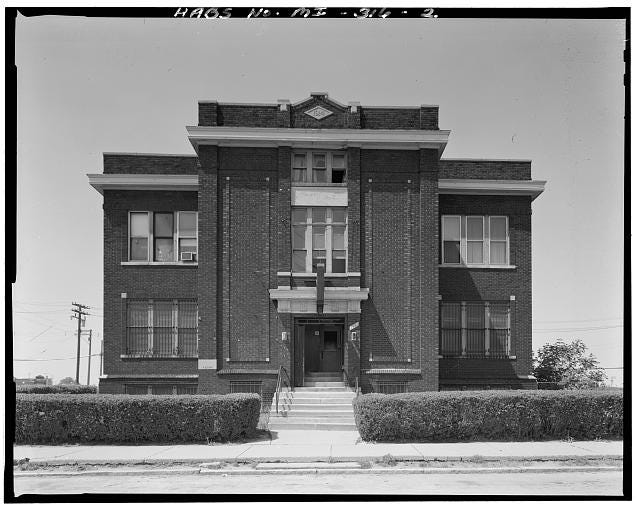
The city peaked, growing to a population of 1.85 million in the 1950s, leading to the large expansion of the currently vacant suburbs that characterise the landscape. It’s here that a domino effect of events begins to cascade. White residents began to exit the city in droves, utilising racially discriminatory mortgage policies. Suburbs such as Dearborn, Warren, and Grosse Pointe expanded rapidly in population. These spaces defined themselves as all-white and aggressively declined integration.
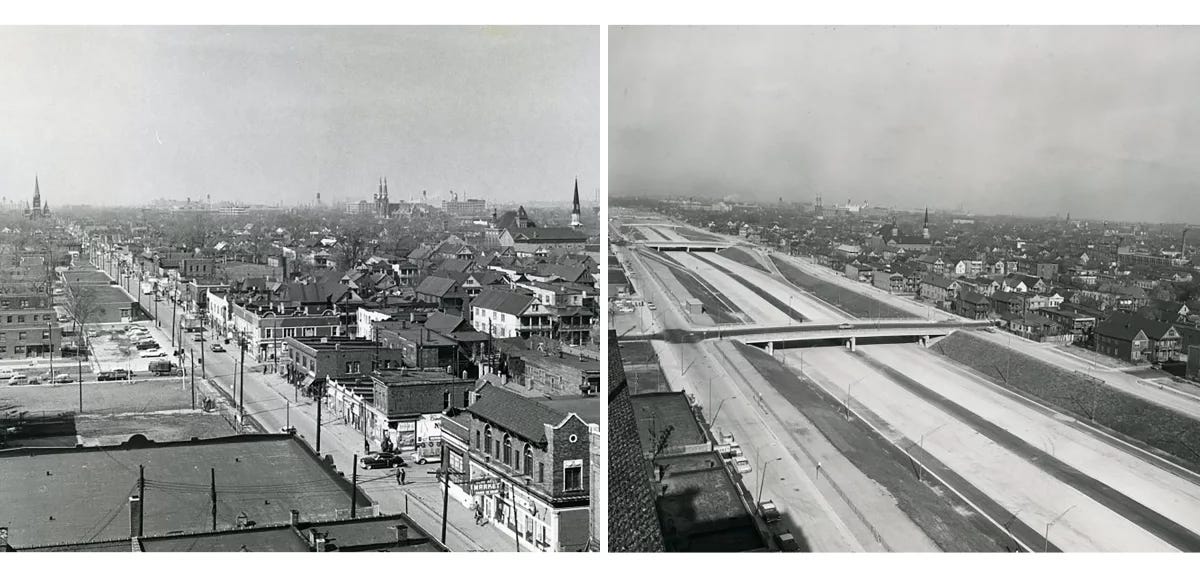
Simultaneously, Black neighbourhoods such as Paradise Valley and Black Bottom were eroded under the guise of urban renewal. The I-375 and the Chrysler Freeway were built on top of a thriving entertainment district and Black-owned businesses, firmly eroding the temporary illusion of equality. The automotive industry stalled, and foreign competition from Japan and Germany kick-started a long stream of layoffs that would continue into the 1970s, exacerbated by the oil crisis, bailouts, and factory closures.
Racial tensions hit a breaking point during “The Long Hot Summer of 1967” with the Detroit Uprising. Housing segregation, job losses due to automation, tensions with the police and the KKK’s presence in Michigan had simmered for too long. A police raid on a speakeasy began five days of riots and looting, resulting in 43 dead, 7200 arrested and 2000 buildings burned. The fallout accelerated the further exodus of residents and businesses throughout the 70s and 80s.
By the 1990s and 2000s, Detroit’s population dropped to 700,000, the crack epidemic and murder rate picked away at the remains of what was left, and the city took long shots at revitalisation through the construction of casinos. In 2013, the city filed for bankruptcy, revealing debts of $18-20 billion. As a microcosm of the American condition, Detroit culminated every social and financial growth and disorder that has characterised the USA.
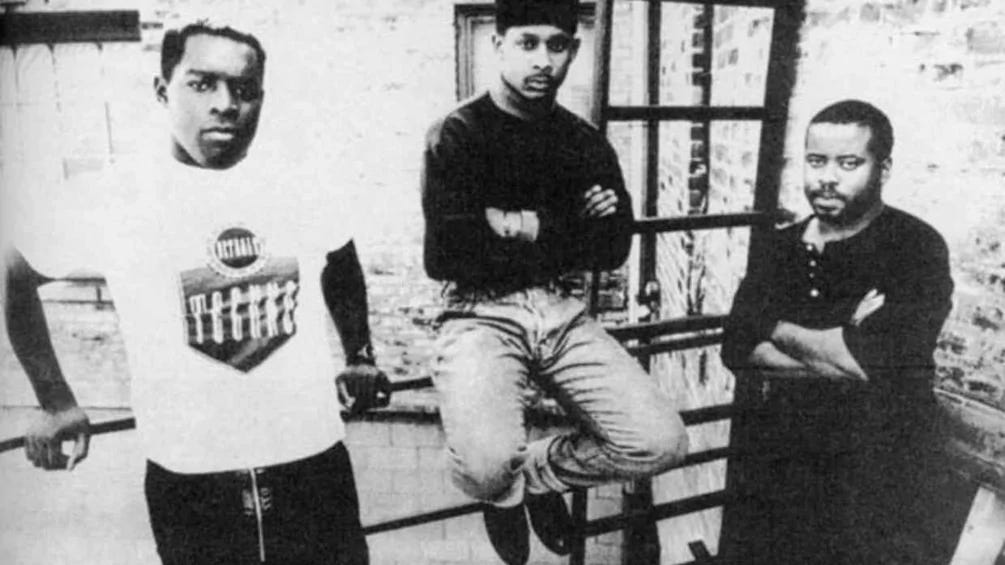
With this behemoth manifesting in the background, we turn to the tale of techno. In the 1980s, in the suburb of Belleville, Juan Atkins, Derrick May, and Kevin Saunderson began to lay the foundations. Simultaneously, they recognised the possibilities stemming from European synth pop (Kraftwerk, Giorgio Moroder, Cabaret Voltaire) and the harmony achieved between man and machine during the automotive boom. As descendants of the Great Migration, they sat on a vantage point that pointed their gaze towards a technology-based future, radical spaces of integration (Music Institute), and self-preservation through creation.
Detroit synth pop walked so techno could run. The releases began to unfold, beginning with the idiomatic Cybotron - Alleys of Your Mind. Arriving in 1980 but labelled 1981 to prescribe futurism. Electro in stature, eerie in theme, with a stiff and mechanical groove that oozes with retrofuturist glow. This is the control condition formed by Juan Atkins and Richard Davis, from which everything that would follow would develop.
Development continued with Techno City. Looking inwards through the city for inspiration, the track coated in gloss and melancholy exhumes the 80s in all its anxious and restless glory.
NO UFO’S by Model 500 can be considered the first fully formed techno production released on the first fully dedicated techno label, Metroplex. Released in 1985, it achieves a complex yet clear essence, with so many attributes developing and revolving throughout its six-minute runtime. Within the callousness of the environment, out of sight from the rest of the world, a genre composed of radicalness and longevity was digging its heels in defiance. Strings Of Life, Beyond The Dance, Good Life, and The Chase would go on to ground the genre and set the stage for what transpired thereafter.
Deservingly so, the Detroit retreat has developed into an escape that is placed on a higher pedestal than most weekenders. For pilgrims, waypoints must be attended to before the festival. Submerge Recordings, developed by Ade’ Mainor and Mad Mike Banks, runs sold-out tours to the small but iconic “Exhibit 300” from their red stone three-storey on The Boulevard. The only techno museum in existence, it houses a collection of synths, drum machines and platinum editions of Strings of Life and Good Life. It’s a story you’ve read many times before, told from the perspective of those who lived it.
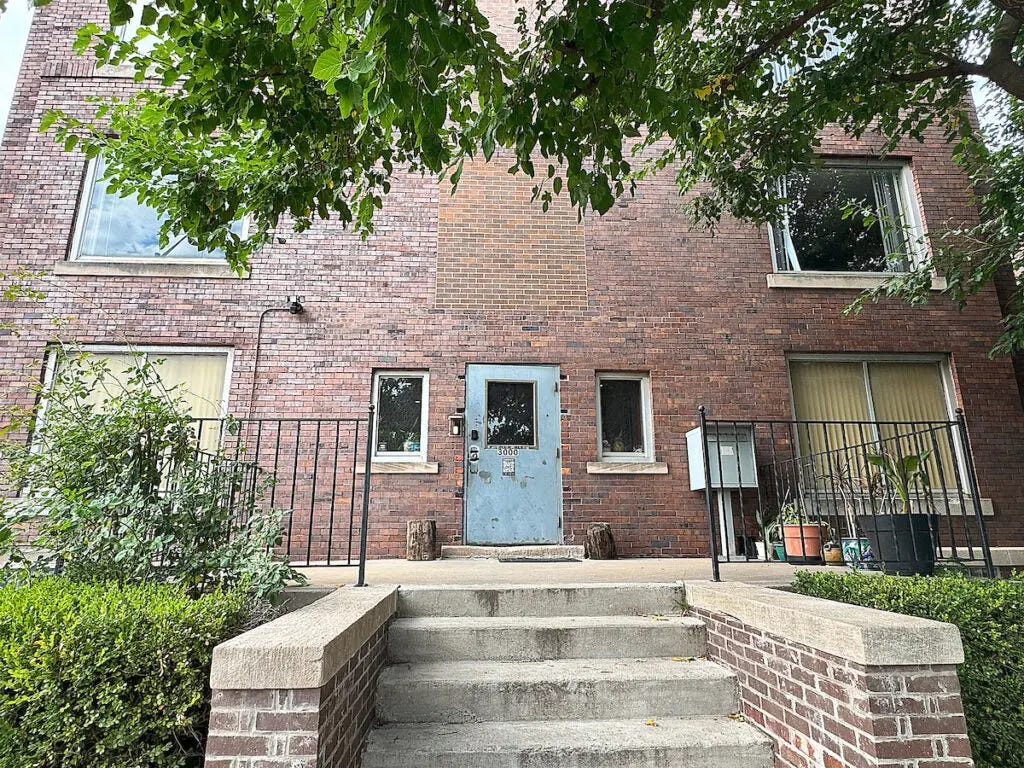
Community is a term that’s sprinkled on electronic music with varying degrees of success. We like the idea, but let it slip through the cracks due to our individualistic nature. Submerge and their next-door neighbours, Underground Music Academy, do their best to circumvent this through education. Production, DJ’ing, and songwriting are taught through the values of Underground Resistance, continuing the tradition through the youth of Detroit.
The pre-parties began on Thursday that week. While, of course, Movement festival acts as the anchor to this marathon, the truth of the city is found in the unending expanse of events that populate the edges of the long weekend. Familiar faces such as Bound provided a taste of NYC’s EBM and hotel fetish scene through Vatican Shadow, Becka Diamond and Minimal Violence.
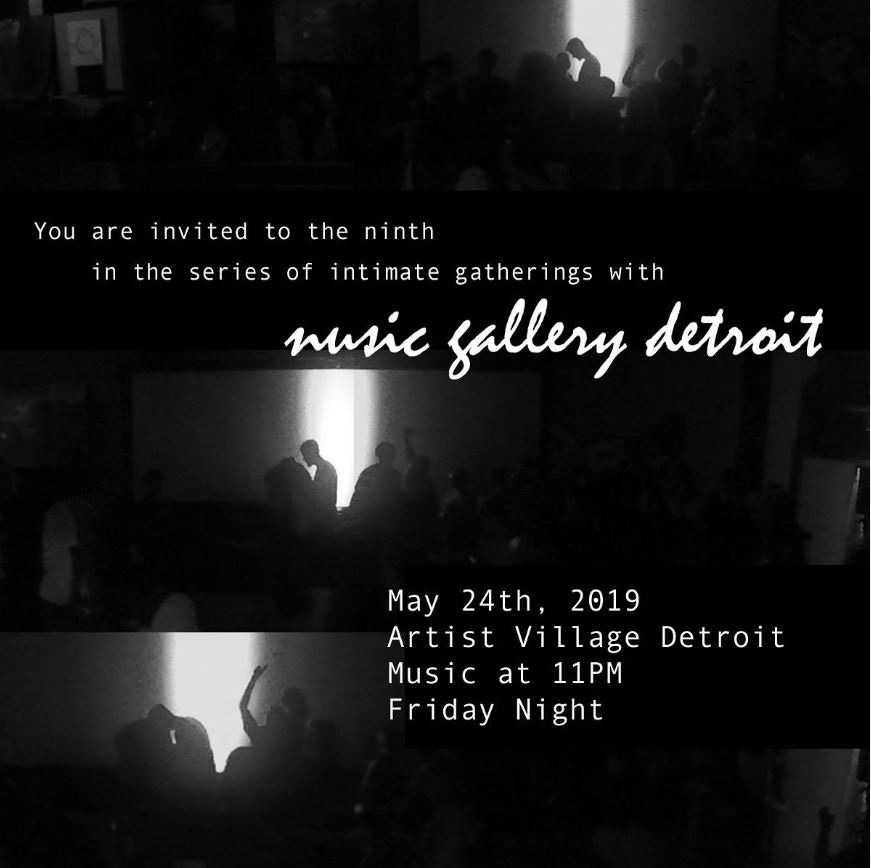
The highlight of these pre-parties is, of course, the annual Sound Signature, Music Gallery Detroit. From behind a curtain open to close, Theo Parrish writes a novel of juggernaut transitions, soul, funk and history in the dimly lit Artist Village. In the absence of the DJ focal point, music takes centre stage with Theo’s narrative being blasted in every crevice of the expansive venue. Clusters of dancers gel together sporadically across the venue, following no rhyme or reason. It works as intended, ideally it’s the sound you wish to prescribe to before a weekend of ever creeping BPMs presented authentically and absent of ego. The early hours draw in, and for the briefest moments, the curtain unveils for acknowledgement to be granted between Theo and the crowd before returning to the final tracks.
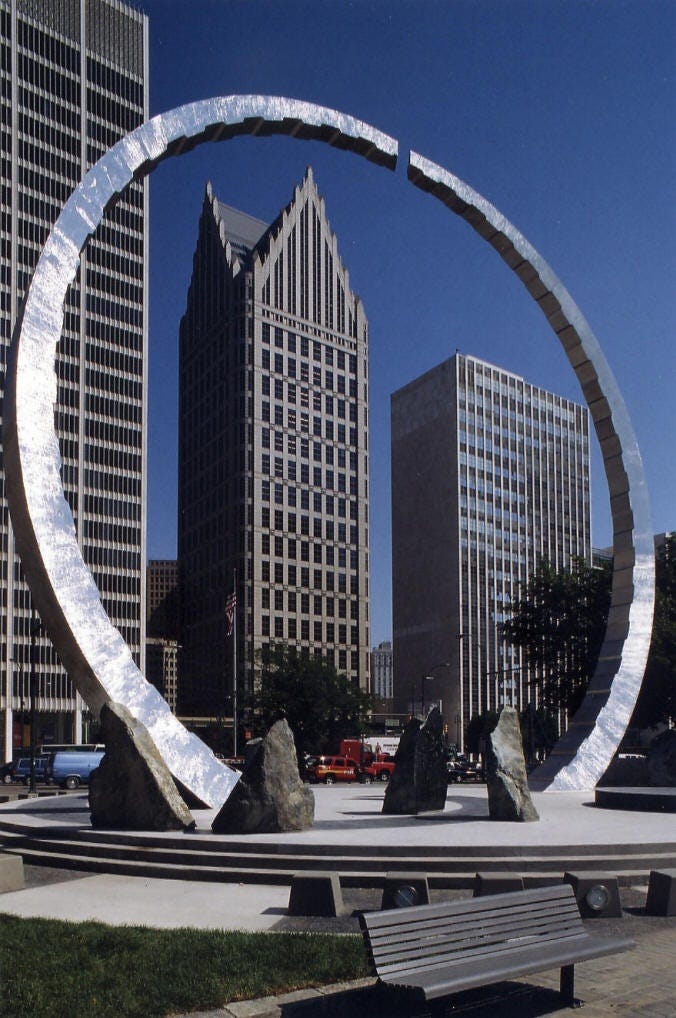
Hart Plaza acts as a basecamp for the weekend. The plaza, designed by Isamu Noguchi, was developed as a gathering space for residents, operating in stark contrast to the city’s traditional layout. He lovingly referred to it as a “horizon for the people”. Sitting on the banks of the Detroit River with a view of neighbouring Windsor in Canada, the location provides its own take on festival landscapes. The topography feels stacked as stages are tetrised amongst the tight concrete space, combined with the rise and fall of the plaza, elevating the exploratory nature of the weekend. Movement’s logo seems to pull from the “Transcending” monument situated at the front of the plaza. Formed of steel gears stretching 63 feet into the sky to honour the tradition of blue-collar work in its symbolic home, designers David Barr and Sergio de Giusti inadvertently provided a piece aesthetically linked to futurism and science fiction that feels situationally relevant for the weekend around it.
The festival’s history (like the city) is complex. Beginning in 2000 as a revitalisation initiative, Detroit Electronic Music Festival (DEMF) was the first-ever house and techno-focused festival in the USA. With a free entrance policy, it drew over 1 million attendees. Artistic direction provided by Carl Craig was initially made with Detroit and Chicago at the forefront. In six years, it went on to have three changes in direction (Derrick May, Kevin Saunderson, Paxahau), three changes in name (Focus Detroit Electronic Music Festival, Fuse-In Detroit, Movement), a financial collapse and a resurgence in its final form starting in 2006 onwards. From then, it continued in an upward and commercial direction under Paxahau’s control.
The time of year allows for pristine conditions for the weekend to be enjoyed. The sun screams down, bouncing back off the grey tarmac, adding to the heated anticipation of the weekend. The lineup of 2019 had migrated from the festival’s initial Detroit forward anchor, expanding towards the shores of Friday night tech-house with appearances from Hot Since 82, Fisher, and MK. Thanks to tunnel vision, the array of quality performances and crowd types was easily sought between this mashup. Octave One did what they did best, following an on-stage introduction by a representative of the Detroit police (the bizarreness of this adding a cherry on top to the performance), blasted out the high-tech soul national anthem Blackwater. The strings arrived eloquently and profoundly in the sun-kissed urban park. In the years prior to this, I’d been finding myself at early morning parties, the type that no one has any business being at that fill you with anxious excitement and a week of dread following your roll in the mud. At each of them, Blackwater’s appearance would be as reliable as the dishevelled faces you saw weekly. Greeting the track in the flesh in the location where it stemmed from was euphoric enough to justify the travel and ticket costs alone.
The roster bolsters representation from the neoclassical range of North American techno. While artists such as Volvox and the Detroit Techno Militia may ring a bell for European audiences, what’s beneath the surface can’t be denied. Noncompliant’s modern channelling of the Midwest sound, filled with the empty spaces and crassness, ricocheted off the low ceiling that enclosed the Resident Advisor Underground Stage. Originally championed back in the 90s, thanks to artists like Akilah Bryant, DJ Skull, and DJ Hyperactive, the Midwest scene and sound stretched far beyond the obvious locations of Detroit and Chicago. Milwaukee, Columbus, Indianapolis, and Grand Rapids operated as an intersection for Acid, Detroit Techno, and Ghetto House. The sound of the groove on steroids that’s resurfaced in recent times is not relevant here. This is a chunky party soundtrack that travels through a stretched path, acknowledging various elements. A nod to the throb of acid, a wave to a chopped vocal sample, a revisit to a classic. The difference is harmonised with vigour across her 90-minute set.
The Midwest is a no-frills, diligent, and determined culture of bizarreness where the strange and peculiar optimise the dancefloor. In its early days, the scene amalgamated a variety of subcultures towards a commonality. Goths, candy kids, breakdancers, graffiti writers and people who rejected the predetermined expectations of 90s American society found a place amongst the chaos. The performativity and glossiness that exist in New York, LA, and Miami are shunned in favour of getting down to brass tacks. Realness has been characteristic of all subcultures that stem from this part of the world. Whether it’s the brutally ugly yet somehow alluring Juggalo way of life or the staunch straight-edge hardcore scene stemming from Columbus and Chicago. Sincerity, the insular topography of the Midwest, and creation as a response to the cultural vacuum drive these modes of being.
Representation through merch is louder on these dancefloors than across Europe. The bootlegging tradition that stems from the Grateful Dead, metal, and hardcore scenes has well and truly seeped into the techno scene. At any one point over the long weekend, you are no more than five people away from a person wearing the classic UR logo tee. The t-shirt is so synonymous with this part of the world that purchasing one is almost a rite of passage. Party series and labels decorate the dancefloor, featuring familiars like Inter Dimensional Transmissions, Moodymann, Sistrum Recordings, Drexiya and the occasional glimpses of party series tees such as Fourth World and Tronic Treatment from the 2005 edition of Movement. While black is always the majority colour, the discretion and cooler than you trends that come with the clothing and European perspective were refreshingly absent as Stacey Pullen merged generations and lifestyles to the sound of Samuel L. Session and Chez Damier following Octave One.
Back in the bunker, Discwoman co-founder Umfang let loose a texturally crunching array of somatic techno. Anonymous, stripped-back kick drums created the frame, accompanied by granularity, obscure and strange sounds through cyclical drive. This coarse and rough approach that merges 90s sounds with a diy feel of drum machine experimentation creates an atmosphere of a circuit board tipping into overdrive in the best way possible. With a background from the Midwest, Umfang’s career began in large Kansas warehouse parties, migrating to the likes of Bossa Nova in New York with the Technofeminism series, her residency in Nowadays, and frequent appearances across Europe, Seoul, and London. Umfang, like Submerge and Underground Music Academy, invests in education. Consistently providing FLINTA and LGBTQ focused workshops that promote exposure and accessibility for electronic music goes hand in hand with Discwoman’s mission statement of “Amplify Each Other”.
The climax that year came in the form of the temporarily short-lived but coincidentally returning this year LSD. Luke Slater, Steve Bicknell, and Dave Somers’ project of seismic proportions turned the concrete casing into a sauna illuminated by the fog of blue lighting. The sound of sonic enormity, decorated with static, dread, and the larger-than-life essence that falls from this trio, encompassed the space and minds of attendees. An excess of energy ruptured and ran riot amongst the crowd. This momentum, while extracting energy, fortunately gifted new life to travel back into the expanse of the night.
“Variety is the spice of life” is well and truly compartmentalised by promoters across Memorial weekend. The never-ending timetable across multiple venues would give even your most organised friend stress over the logistics of the weekend. Thankfully, many artists and DJs traverse across different collectives playing to different spaces, allowing some breathing room for attendees. Marble Bar hosted Texture that weekend, who disregarded a clear tone for the evening in favour of quality variance. Egyptian Lover, RRose, Anthony Parasole, Dr Rubinstein, PLO Man and a Staub showcase rarely hang out together on a lineup, but this weekend didn’t necessarily follow a formula. Transporting from LSD into the precision of Egyptian Lover, while jarring, also operated as the necessary antidote to conserve energy. The crisp clacks and electro tinged hip hop sounded wide and detailed thanks to his significantly slower BPM. Lover’s aura is undeniable. One of the last remnants of the old school that seemingly perfected his act in the 1980s, his set exhumes technical excellence that enthrals and excels.
As the dawn began to rise and Anthony Parasole was beginning his onslaught of bright, clean movement inducers, the exit was made towards Lincoln Street Art Park. The space was bathed in that special glow only relevant to the sleep-deprived and early risers. The grass decorated with obtuse, irregular metal structures painted in bright neon colours, their relevance and placement feel at home at this moment in time, dotted amongst hundreds of attendees, well and truly in the grips of day 1 fever.
Techno can be heard as a hum in the background. While sound is ever-present, its relevance has been downgraded to accompaniment rather than a main event. Fire pits pull groups in, and rampant chatter flows around the space. Nitrous balloons the size of over-inflated footballs are sold amongst the chaos, with the whoosh of canisters adding to the cacophony of the environment. For a brief and distinct moment, a freight train crosses the rail line that overhangs the end of the park. It simultaneously pulls the attention of all in attendance and lets rip the distinct sound of a Nathan K5LA horn. The entire Art Park explodes in cheers louder than the sound system as the rusted graffiti-clad juggernaut rips through this moment of delirium.
Taxi, golden hour, interim, return, exhale, shower, eyes shut, can’t sleep, eyes open, retreat, give in. Post-party routine is still the same, no matter where I am. Sunday consists of carb loading, not moving as fast as I want to, drinking a beer slowly, and awaiting the energy to return. The novelty of this festival includes your residence in a Courtyard by Marriott. The onsite pool returns some essence to my soul before my indulgence in the mozzarella sticks from the downstairs Applebee’s promptly steals it again. On the return to Hart Plaza, the noise and heat of this Midwest arcade hit harder than previously. Hare Krishnas cover the sidewalk, their upbeat energy and soft orange garb acting as a counterweight to the sea of black-clad festival goers. I’m handed a flyer by a scientologist in candy raver cosplay, attempting to draw my attention toward an afternoon of diagnostics. I spend too long trying to decipher it in the queue and hastily throw it in the bin before it leaches any more mental calories from me. Ryan Elliot soothes my day two inner turmoil as he plays Ben Sims - Work It (Vincent D Mix) throughout his very non-Panorama-Bar-esque set. The role and review of hard groove can and will bring you back to life.
Moving to Chris Liebing for nostalgic reasons (to grow up on the CLR podcast was a youth worth living), the sun begins to set against the backdrop of the Detroit River. Boats traverse across the background of the stage as the bounce of modern Drumcode fills the tiered amphitheatre. The orange hue, momentary pause through transition, and the gratitude of this brief moment ground the evening in solid foundations. Returning to the RA bunker, Oscar Mulero is midway through his standard procedure of creating waves of deep hypnosis. The liquidity of sounds spread around the room and thrust the crowd through waves of deep explorative momentum. As the final track comes to a close, I realise in no time at all I’m back to where I started 24 hours previously. There’s less haste in my steps this time as we walk down East Jefferson Ave towards the hotel, holding onto energy. The focal point of the weekend is only a few hours away.
Interdimensional Transmissions started their journey in 1995. Founded by Ectomorph (BMG & Erika), the label’s ethos towards sound as a vessel to see beyond the norm through futurism, depth, exploration of the strange and non-linear answers to big questions has created experiences that exist outside of any standard partying circuit. Electro, abstract techno and sounds that push the idea of what electronic music is became the weapon of choice to establish an environment of submersion.
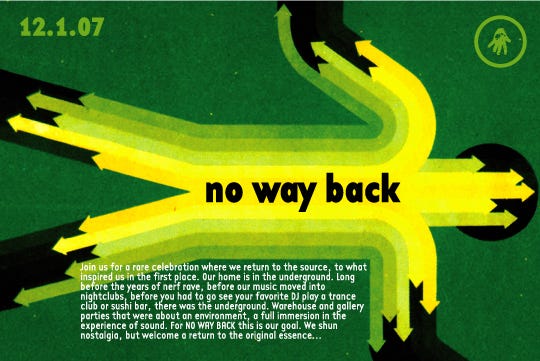
Inspired by the aesthetic and ethos of Detroit circuit in the 90s, BMG approached marathon set champions Derek Plaslaiko, Carlos Souffront and Patrick Russell about doing a 12-hour party with only four DJs on the roster. Beginning in 2007, No Way Back (NWB) took its tentative steps forward that continued into an annual tradition with a strong cult following. Twelve years after its inception, I was lucky enough to find myself in attendance.
We made haste towards the Tangent Gallery after a couple of hours of R&R. Departing the lights of downtown and onto the dimly lit freeway shifted the energy towards trepidation for this commitment. Turning off down a back street, we reached our destination. As far as diy spaces in non-descript urban environments go, Tangent Gallery is prime real estate. Situated on the corner of East Milwaukee Ave and Oakland St, the venue sits discreetly against the American industrial estate landscape. Devoid of niceties and illuminated by street lamps that stand too far away from each other, forcing the pedestrian to walk through tranches of the night, the uncanny essence feels appropriate for a doorway past normality.
Stepping inside feels transportive at a minimum. A humble parachute hung low and, with intention, envelops the dancefloor into a microclimate of sub bass, minimal rhythm, and garnishes the ability to push this sound as far as it can go. You move, submerged in an idea of freedom and expression. The space around you heaves from momentary openness to being sandwiched between several people. Squiggles of acidic signatures swim through the microclimate, becoming personified throughout the long, extended journey. Low-hanging material comforts and utilises, bringing the atmosphere inwards into a clear concentration of intentional energy intense to the senses. Reflections bounce across the nylon, creating layered visuals across their conical and elliptical spreads.
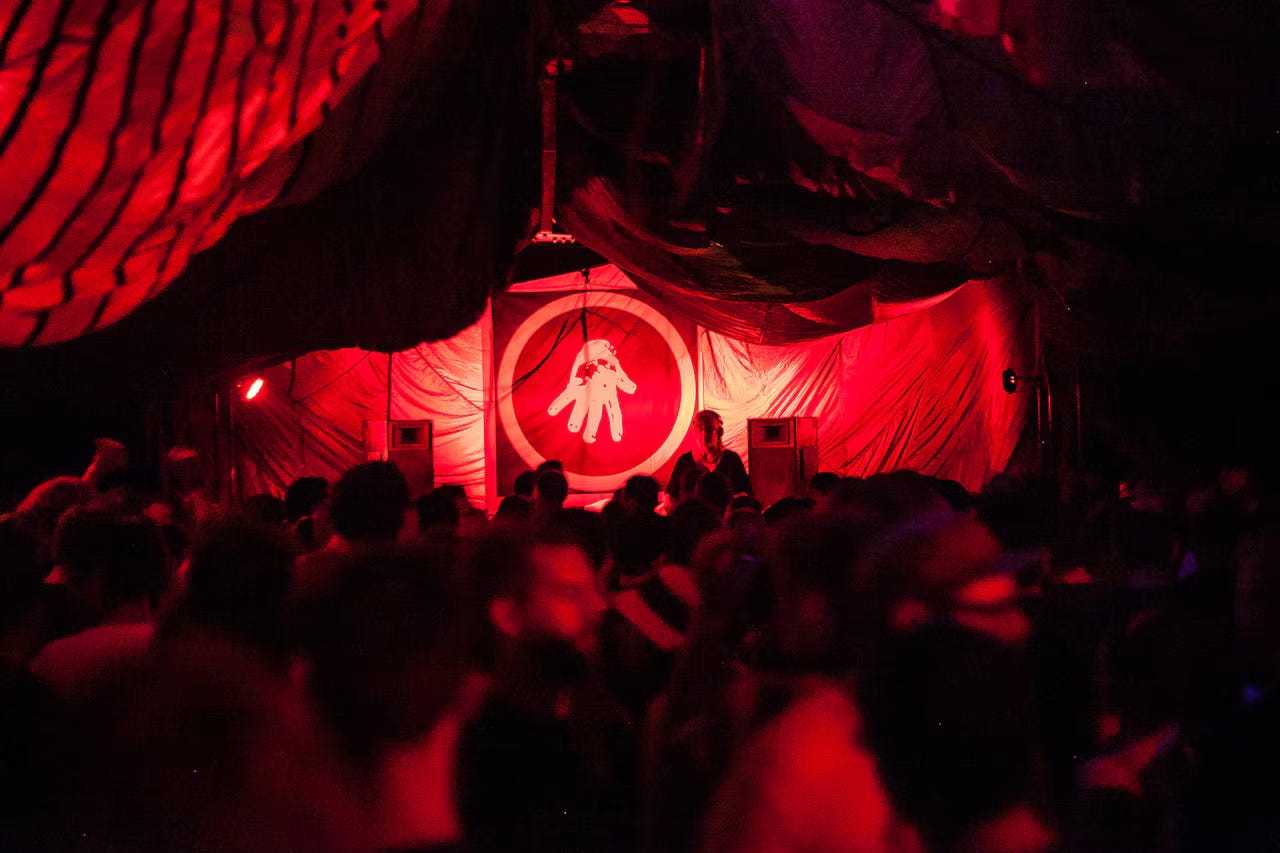
The tempo sits towards the bottom half of the index, retaining a throb that’s returned to consecutively amidst visits to sounds of the upper end of the harmonic scale across the proceedings of the night. The music goes so far into the absurd and abnormal that, at times, it’s clear the DJ is intentionally pushing the boundaries of what the audience can withstand. As much as this is a party, this is not a party that caters to all.
NWB is intention and depth, with a tried, tested and tweaked formula that personifies Midwest electro minimal, beloved and strange. Too new to be classic, far too weird for the norm, too itself to be anything else. A learning curve in the joys of how far left an idea can go.
Honestly | Viscerally | Sublime | Detroit
Exploratory is the only way to categorise the extent of the sound library you’re subjected to. Anchored by their own releases, artists such as Plaslaiko, Mike Servito, Erika, Patrick Russell, Eris Drew, and BMG guided NWB past the troposphere. The label seeks to fuse the futuristic and the cathartic with an open mind. Their poster-boy track, The True Story of Detroit Groove, by Plaslaiko and BMG menaces and glares right through a listener with its resonant creepiness. Ditching the sheen of the traditional techno tale of Detroit, what arrives is ugly wonkiness that keeps you upright at an angle, attentive but uncomfortable. Chromed Out from Ectomorph plays with both light ideas and forward momentum, contrasting against a precipice of the unknown and unfamiliar. Released post-my journey but as relevant as ever, Eris Drew’s Fluids of Emotion arrived in 2020. Almost immediately, Transcendental Access Point positioned itself as a classic of modern uplifting house. Bright keys radiate exuberance and joy that fills a listener with a rising delight that can’t be contained. Complemented with a sample from ethnobotanist Kathleen Harrison speaking about her first experiences with DMT from the cult classic DMT: The Spirit Molecule. This is quintessential Eris Drew, the bigger, wider feelings of zest, glee and effervescence compiled into six minutes with an appropriate nod to psychedelics.
That night spun into a mesh of orange, purple and blue hues. Tracks floated in and out of focus. The ominous roll and break of KGIV - Regulatory Capture cascades above me. The glints and whirs of DJ Red-Moon seduce and enchant the air around me. Soul Oddity - DJ Tokyo plays with the fabric of my reality. My legs don’t work. Something satisfying and appropriate lies in this loss of functionality.
As the sun rises, NWB spills out into the garden of Tangent Gallery. Time in the microclimate, while enthralling, makes you yearn for an equaliser, which comes thankfully in the form of the morning heat. The reopening of the bar calls for ice-cold waters to suit the occasion, and I become entrapped in a conversation. “These people are disgusting, selling water!? It’s a human right, they should be giving it to you for free!” he rants. At that moment, my memory is unable to pinpoint whether, at any point over the past week, I have seen complimentary water anywhere. I wonder why I’m allowing myself to go down this path of no results. Speech patterns of early morning outbursts are only relevant to those from whom they came. I retreat to the shade and allow the heaviness of the weekend to begin to cascade. Now is definitely the time to pull the plug.
I drift in and out of sleep while a whole diurnal transition occurs outside my window. The type of sleep when your body has no idea whether it’s coming or going. Coincidentally, the festival ends on a Monday, so I still haven’t missed my weekly ritual. A 40-minute shower with a mind full of squeaky electro and blown-out fuse ends. The night before gave everything but in turn took my lot. But less of that is important right now.
The cleanest items of clothing are paired together, and one heavy foot is put in front of the other. There’s only one solution to this conundrum, DJ Nobu. Crystal momentum heaves around the concrete bunker for the last time. Nobu’s Ichimaru creates a hypnotic centre point to gaze into, soothing the tired but attentive crowd. Weary two steps fill the dancefloor as I watch from the top level, nursing an oversized beer. The uninviting taste of Coors Banquet mimics the level of enthusiasm I currently hold. Attempting to peel off this Oscar the Grouch mentality I’ve earned myself, an obvious but correct choice has to be made. Floorplan.
Lack of sleep, extremities of sound, and new and strange places mix into a unique feeling that’s hard to pinpoint yet familiar to many. The merging of melancholy, sentimentality and exhaustion subsides as an emotional clusterfuck pushed to its peak through the high keys, upbeat sheen, and all-around heart-warming cheesiness of Floorplan. Confess lights up whatever I have left inside me, the temperate night air balances my inner regulation, and the performance puts an appropriate full stop to this marathon. Sleep arrives easier than ever on my final night in Detroit.
2019, unbeknownst at the time, became our reference point for the last normal before the pandemic. Blissful ignorance rested on that weekend, with no insight into what was unfortunately around the corner. The yearning for the patterns of those weekends only occurs because it can’t happen like that again. Despite intentions, you can’t shake off the new normal that has existed in electronic music post-reopening. A feeling elevated by the commercialisation that cemented itself in 2019, along with a sense of loss from a world event that is too big to break down. A visit to where this all started, while standing on the ledge of change, in hindsight, is a right place at the right time decision. In May 2019, it was simply a typical decision. The remainder of my time in New York was filled with Unter, Nowadays 24/7, Basement, Jack Dept, and not appreciating what I had until the floor collapsed in on itself in March 2020.
We’re always searching for insight in reflection. On the surface, not much has changed. Journeys to dancefloors elsewhere will continue as long as I feel the pull. The impact clearly lingers. I’m writing about this seven years later to attempt to understand a long passage of time that moved in the blink of an eye. Repetitive behaviour patterns seek comfort and predictability. This weekend removed both. The source of what we seek can never be close to the norm.
No Way Back resident and Detroit native Carlos Souffront self-references:
I am very much an outsider and always have been. I like what I like, do what I do, roll with the freaks I’ve always rolled with, and ignore most everything.
If a person is a product of their environment, then the essence of these words was felt throughout the big and small experiences of my brief time in the city. Detroit is unabashedly itself. Tight-knit, unflinching, and focused on its own agenda. While the scene cycles onward outside the Midwest, they persevere inward for preservation. History, while relevant, is not the only structural support these parties use. Innovation and their own way of expression feed a beast that’s not easily experienced. Complex beauty, otherworldliness, and experiences that linger are at home in the birthplace of techno.